Autumn 2026 Creative Writing Programme
The Federation of Worker Writers and Community Publishers (FWWCP) was a network of community writing groups across Britain from 1976 to 2007. It was one of the most significant working-class writing and publication projects of the 20th century, bringing together literacy practices, class politics and creative education.
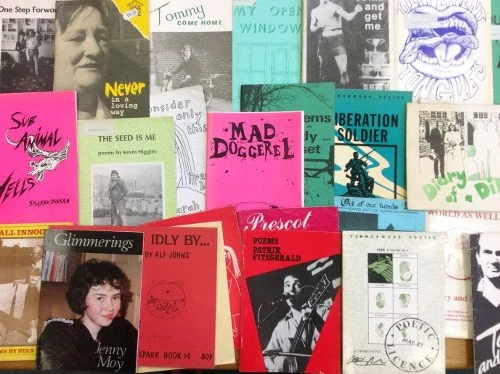
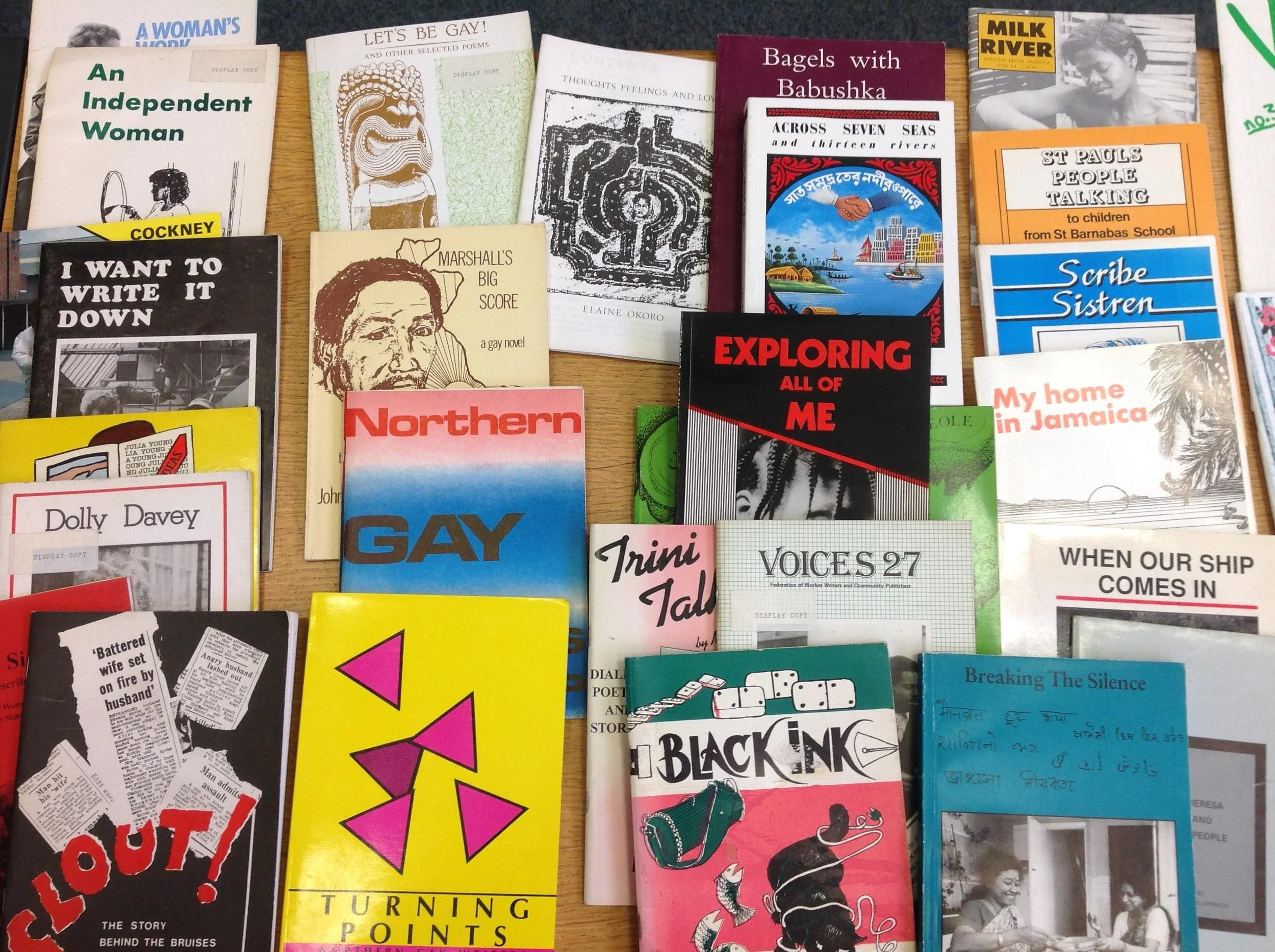
Many of the writing groups came out of local political activity in the 70s. Some emerged from community spaces, like Centerprise in Hackney, East London, which ran a bookshop, publisher, crèche, cafe, ESOL classes, youth groups and legal advice clinic. Others such as QueenSpark in Brighton began from a grassroots campaign to open a nursery school instead of the council’s proposed casino. In FWWCP publications, people wrote about their days, their dreams, their desires; their terrors. A collection of poems by Vivian Usherwood, a 12 year old boy who had immigrated from Jamaica to England, sold over 8,000 copies. Bus drivers documented their working day in detail, people wrote collective histories of their local area, a teenager wrote with biting humour about her “trip through the system” at the dole office.
The FWWCP aimed to “further the cause of working-class writing and community publishing” — necessary in the face of centuries of active suppression of working-class literature. Through poetry, prose, fiction, memoir and local history, the FWWCP’s archives (housed at the Trades Union Congress library) illustrate the changing social, political and economic conditions of the working class over the 20th century. Rather than reduce or simplify, the writing pushes against monolithic ideas of working-class life. Neither demonising nor romanticising it, it offers a multitude of experiences, feelings, positions and perspectives through self-representation.
From 1976 to 2007 the FWWCP circulated more than 1 million publications, growing to a network of over 120 writing groups: each self-organised and particular to its own geographies. The network assembled collaborative newsletters, anthologies of writing, magazines and writing festivals, as well as continual publications by writing groups within the network.
*
This year marks the 50th anniversary of the Federation of Worker Writers and Community Publishers.
Over autumn 2026, writing from the FWWCP can be accessed at Red Herring Press. This includes pamphlets and books, film, and other associated materials. Anyone living in Yarmouth (and beyond in East Anglia) is invited to come and explore the materials, and write their own creative responses. We can find both similarities and differences in 2026 to 1970s Britain: the authority of the state, and at the same time its absence; while state violence, threat and punishment has continued through technological developments — epitomised under ‘austerity’ in a security tag pinned to a £9 tub of Lurpak.
Drop into Red Herring Press during one of these times, where you will be able to explore the FWWCP archival materials, and write independently. No experience of writing necessary, and no booking required:
Archive / writing drop-in dates
Wednesday 30th September, anytime between 6PM – 8PM
Saturday 3rd October, anytime between 2PM – 4PM
Thursday 8th October, anytime between 12PM – 2PM
Tuesday 13th October, anytime between 2PM – 4PM
Wednesday 21st October, anytime between 6PM – 8PM
Tuesday 3rd November, anytime between 2PM – 4PM
Wednesday 4th November, anytime between 6PM – 8PM
There will be creative writing prompts for those who want them, tea and coffee, and lots of books.
*
There will also be 5 structured creative writing workshops run by local writers. Each will open up a different door to the FWWCP archives, using it as a starting point for generating new writing. These are free but have limited places and require booking:
Our Streets with Jason Parr:
Tuesday 6th October 6:30PM – 8:30PM.
This session is now full. Sign-up link below to join the waiting list.
So This is England with Lotte L.S.:
We will use FWWCP materials to imagine and ask one another what kind of futures we might want to live in.
Wednesday 14th October 6:30PM – 8:30PM.
This session is now full. Sign-up link below to join the waiting list.
Migration and Identity with Gia Mawusi:
Saturday 24th October 2PM – 4PM.
This workshop will be in Portuguese.
Sign-up link below.
Working, Motherhood with Bel Greenwood:
Who has kept the ‘household running’ while simultaneously working a job, raising children and making a life? Drawing on FWWCP writing by and about working-class mothers, this session explores the intersections of paid employment, domestic labour, motherhood and memory.
Saturday 31st October 2PM – 4PM.
Free childcare will be provided for this session, which is open to everyone aged 16+
Sign-up link below.
The Little Things Are the Big Things with Rachel A.H.:
Why writing poetry about our own lives in our own voice matters.
Saturday 7th November 2PM – 4PM.
This session is now full. Sign-up link below to join the waiting list.
All workshops will take place at Red Herring Press (135 King Street, Great Yarmouth). If you can no longer make a session you booked please get in touch as there is usually a waiting list: redherringpress@tuta.io
Selections from the drop-in sessions and structured workshops will be included in a Red Herring Press publication (with consent).
All participation is free, with parts of the programme made possible via a small grant from the Raymond Williams Foundation. If you have £ to spare, consider becoming a member — and receive past & future Red Herring Press publications in exchange.
The FWWCP’s 5,000+ archival materials are housed at the Trades Union Congress library in London. The FWWCP Archival Project is currently working to digitalise these materials, which Jessica Pauszek details in her excellent book on the FWWCP. A physical copy is available to read at Red Herring Press.